






RecifAtHome guide
Corals build their skeletons from elements dissolved in the water. Knowing the right values, measuring them and above all keeping them stable is the foundation of every successful reef aquarium.
In short
- Stability matters more than the perfect number.
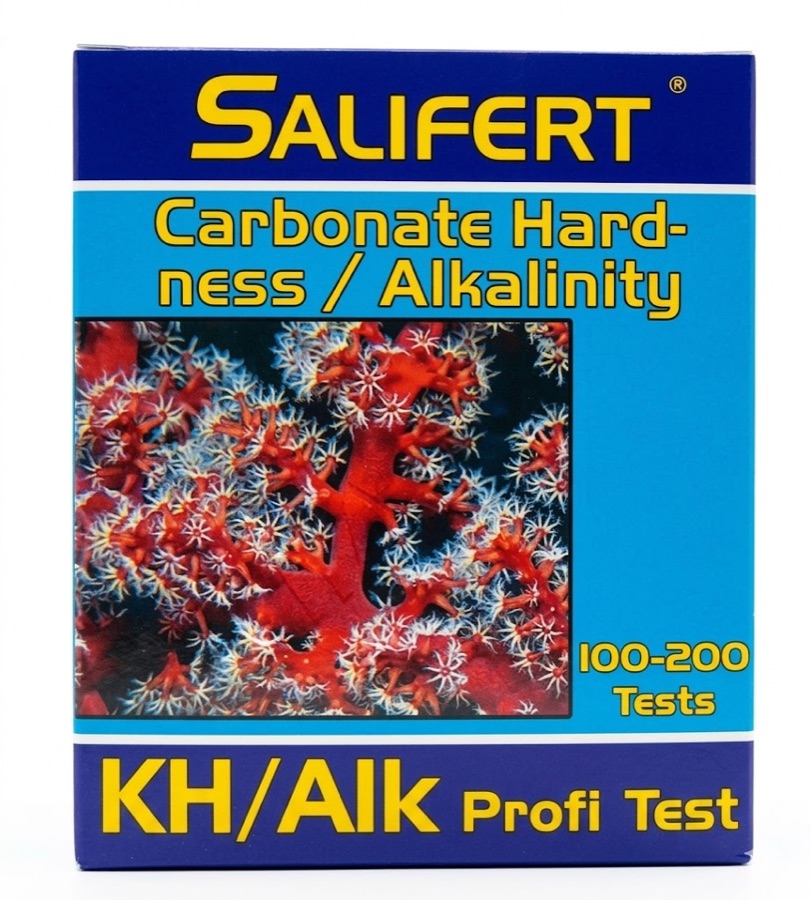
- Alkalinity (KH) is the top priority: it should not fluctuate by more than 1 dKH per day.
- Nitrate and phosphate should not be at zero: corals need them.
- An ICP test every 2 to 3 months checks elements that standard test kits miss.
Reference table
| Parameter | Recommended value | Testing frequency |
|---|---|---|
| Temperature | 24 to 26 °C | Daily |
| Salinity | 35 ppt (SG 1.025 to 1.026) | Weekly |
| pH | 7.9 to 8.4 | Weekly |
| Alkalinity (KH) | 7 to 9 dKH | Twice a week |
| Calcium | 400 to 450 mg/L | Weekly |
| Magnesium | 1,250 to 1,400 mg/L | Every 2 weeks |
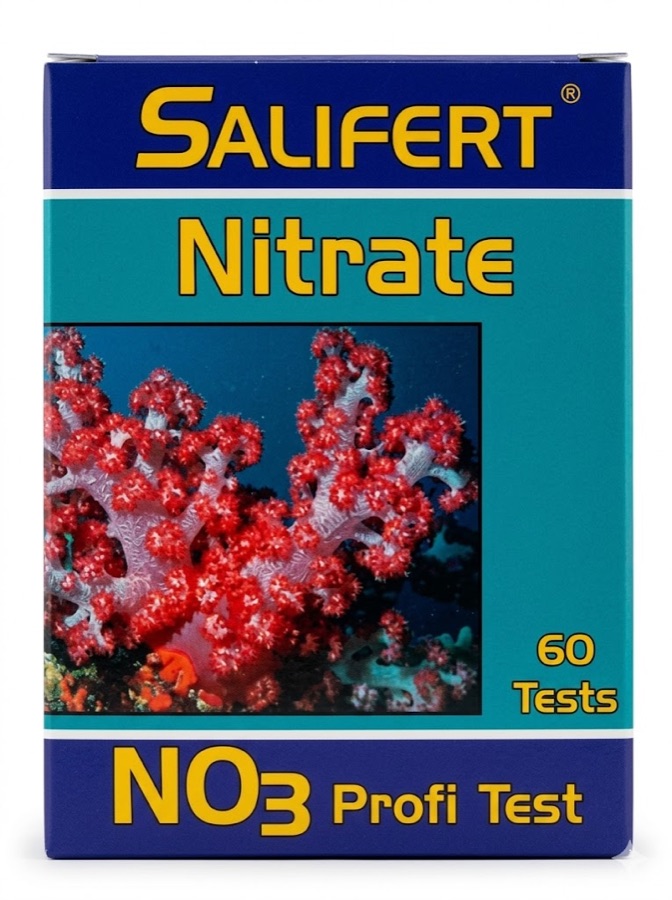
| Nitrate (NO3) | 2 to 10 mg/L | Weekly |
| Phosphate (PO4) | 0.02 to 0.08 mg/L | Weekly |
| Potassium | 380 to 420 mg/L | ICP test |
| Ammonia and nitrite | 0 | During cycling and when problems arise |
Soft coral tanks tolerate higher nitrate (up to 20 mg/L); demanding SPS tanks tend to aim for the low end of these ranges.
Alkalinity, calcium and magnesium: the three essentials for skeleton growth
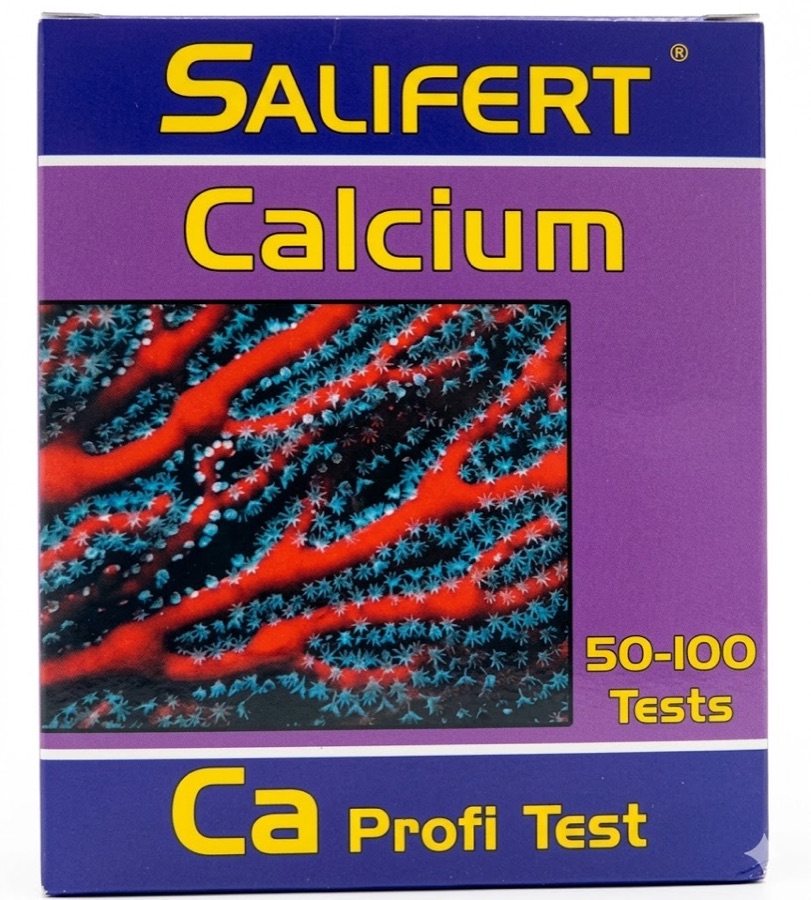
Corals, giant clams and coralline algae consume calcium and carbonate (measured as alkalinity) to build their skeletons. Magnesium helps prevent these elements from precipitating. As the tank becomes more heavily stocked, consumption rises and water changes are no longer enough: supplementation becomes necessary.
- Balling method: three solutions (calcium, alkalinity, magnesium and trace elements) dosed daily with a dosing pump.
- All-in-one products: one or two balanced solutions, simpler for medium-sized tanks.
- The calcium reactor: it dissolves calcareous media with CO2, ideal for large SPS tanks.
- Kalkwasser: supplies calcium and alkalinity and raises pH, often through the auto top-off.
Good to know
Rule of thumb: each time alkalinity drops by 1 dKH through consumption, calcium drops by about 7 mg/L.
Nitrate and phosphate: not too much, not too little
In excess, nitrate and phosphate feed algae and slow stony coral growth. At zero, corals pale, Zoanthus close and cyanobacteria can appear. To lower them: feed less, increase water changes, check your skimmer, use phosphate removers or nitrate removers. To raise them: feed more, reduce skimming or media use.
Measuring accurately
- Reagent test kits are affordable and enough to start with.
- Photometers give a more precise digital reading, useful for phosphate.
- Automatic testers measure alkalinity or nutrients several times a day.
- ICP testing measures more than 30 elements in a laboratory and detects excesses (metals) or deficiencies (iodine, potassium, strontium).
Always test at the same time of day: pH varies between day and night, while alkalinity varies with your dosing schedule.
Frequently asked questions
What alkalinity for a reef aquarium?
Between 7 and 9 dKH, and above all stable: avoid swings of more than 1 dKH per day.
What nitrate level for a reef tank?
Between 2 and 10 mg/L for a mixed reef. Soft coral tanks tolerate up to 20 mg/L.
Why is my phosphate at zero when I have algae?
Algae consume phosphate as it becomes available: the test reads zero even though phosphate is being produced in the tank. Reduce feeding and remove algae manually.
Do I need an ICP test?
Not to get started, but every 2 to 3 months it reveals excesses or deficiencies that standard test kits cannot detect.
Shop the categories
Guide written by the RecifAtHome team, coral aquaculture in Roche-lez-Beaupré (France) since 2010. Updated: October 2026.